
What is Shockwave Therapy?
Shockwave therapy, or Extracorporeal Shockwave Therapy (ESWT), is a non-invasive medical treatment that uses acoustic waves to stimulate healing in injured or damaged tissues. It is commonly used for musculoskeletal conditions, such as tendonitis, plantar fasciitis, and calcific shoulder tendonitis and has several potential benefits:
-
ESWT can reduce pain by disrupting pain signal transmission and stimulating the release of endorphins, the body's natural painkillers.
It is particularly effective for chronic pain conditions like plantar fasciitis, tendinitis, and calcific shoulder tendinitis.
-
Shockwaves stimulate blood flow and angiogenesis (formation of new blood vessels), which enhances the delivery of nutrients and oxygen to injured tissues.
This accelerates the healing process for conditions like tendon injuries, stress fractures, and non-healing wounds
-
ESWT can decrease inflammation by breaking down calcifications and scar tissue, which often contribute to chronic pain and restricted mobility.
-
Unlike surgery, ESWT is non-invasive, meaning there are no incisions, minimal risk of infection, and no need for anesthesia.
It is generally well-tolerated with few side effects, such as temporary redness or swelling at the treatment site.
-
By reducing pain and promoting healing, ESWT can restore range of motion and improve functionality in affected areas, such as the shoulder, elbow, knee, hip or foot.
-
Patients can typically resume normal activities shortly after treatment, making it a convenient option for those with busy lifestyles.
-
ESWT is particularly beneficial for chronic conditions that have not responded to other treatments like physical therapy, medications, or corticosteroid injections.
-
In some cases, ESWT can help patients avoid the need for surgery, reducing associated risks, costs, and recovery time.
-
ESWT is used to treat a wide range of musculoskeletal and nerve conditions.
Plantar fasciitis
Achilles tendinitis
Tennis and Golfer’s elbow (lateral epicondylitis)
Calcific shoulder tendinitis
Stress fractures
Low Back Pain
Neck Stiffness
Frozen Shoulder
Knee Pain
Neuropathy
-
Many patients experience long-term relief after a series of ESWT treatments, reducing the need for ongoing interventions
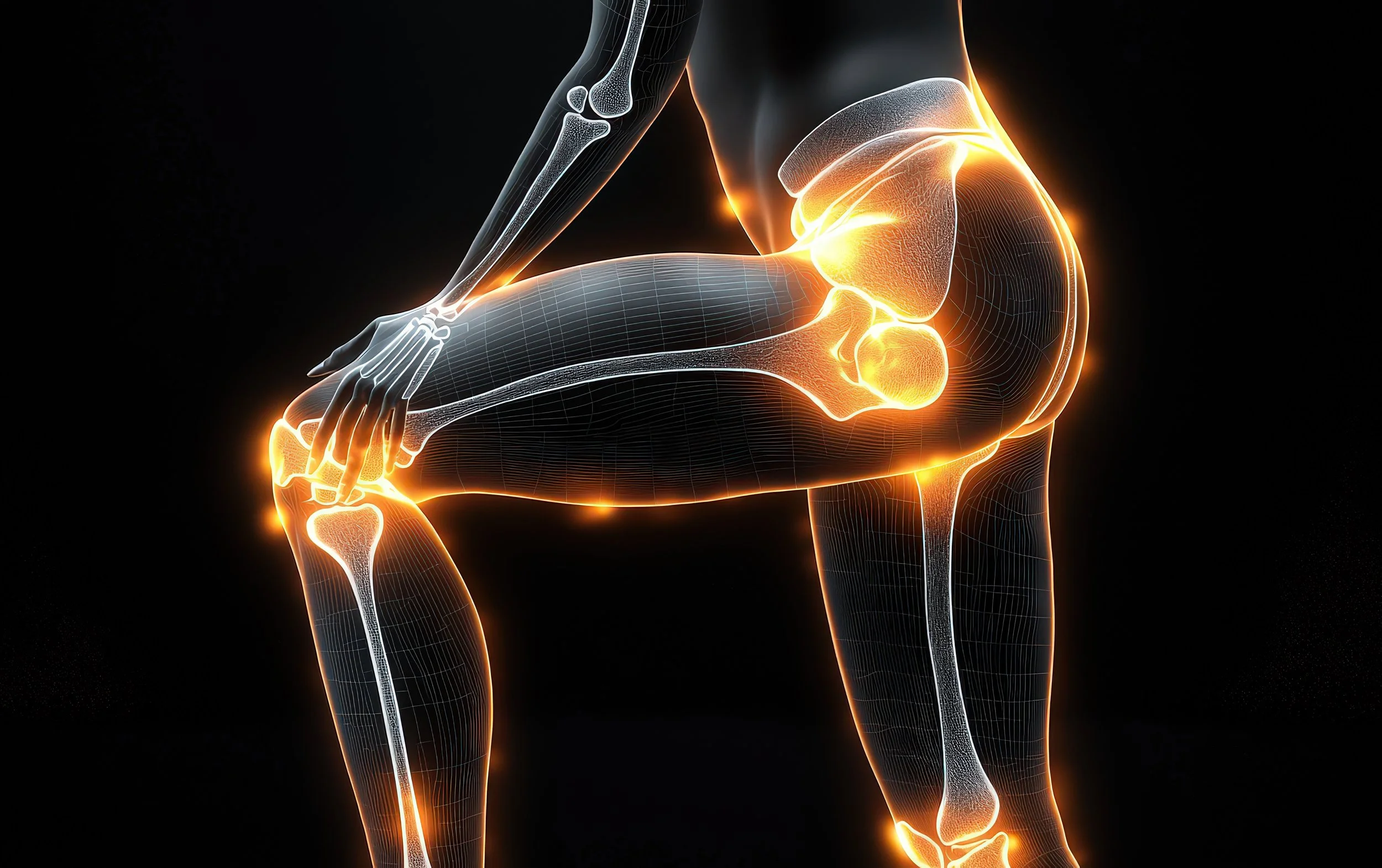
How it works
Three technologies work in different ways and at different depths. Your practitioner chooses one or a combination based on the area and your goals.
Shockwave (ESWT), "focused"
Extracorporeal shockwave therapy uses acoustic waves generated outside the body and focused on a specific area of soft tissue. These are mechanical pressure pulses, not electrical shocks.
Creates controlled micro-stimulation that prompts the body's own repair processes.
Supports new blood vessel formation and circulation to the area.
Stimulates collagen-producing cells.
May help break down calcium deposits in tendons.
May reduce pain signaling, including levels of Substance P.
Feels like: rhythmic thumping or pressure, usually 4 to 6 out of 10 for most clients. Intensity is adjusted to you.
Deep magnetic therapy (EMTT)
Extracorporeal magnetotransduction therapy delivers high-energy electromagnetic pulses that can reach 18 cm or more below the skin, so it suits deeper joints, the hip, shoulder and spine.
Influences ion movement across cell membranes.
Supports cellular energy production.
May calm inflammatory signaling.
Supports nerve function and comfort.
Feels like: a warm pulsing or mild tingling deep in the area, with little surface sensation.
Radial shockwave (EPAT)
Extracorporeal pulse activation technology uses pressure waves delivered by a handheld applicator across a broader area, which suits larger muscles and fascia.
Converts mechanical pressure into cell signaling.
Supports local circulation and lymphatic flow.
Helps loosen tight, adhesive tissue.
Calms pain signals through nerve stimulation.
Feels like: firm tapping or drumming, a bit like a massage tool, with gel on the skin.
Our equipment
We use STORZ Medical shockwave and EMTT devices, a Swiss company founded in 1987 and part of the KARL STORZ Group. CuraMedix is STORZ Medical's full-service U.S. distribution partner. All three of our technologies run on STORZ Medical systems.The future of Shockwave Therapy is bright, with ongoing research expanding its applications and improving its efficacy. As technology advances and our understanding of its biological effects deepens, ESWT will likely become a cornerstone of non-invasive treatment for a wide range of conditions.
COnditions
Clients commonly come to Marin Shockwave for relief from pain and stiffness linked to the areas below. Marin Shockwave does not diagnose or treat medical conditions, so please see your physician if you are unsure what is causing your symptoms.
Foot and ankle: Plantar fasciitis and heel pain, Achilles tendon pain, a rolled ankle
Knee and leg: Patellar tendon pain (jumper's knee), general knee pain, hamstring injuries, shin splints, IT band tightness
Hip and back: Hip bursitis and trochanteric pain, low back pain, sacroiliac (SI) pain and spasm, scoliosis-related stiffness
Shoulder, arm and hand: Rotator cuff pain, frozen shoulder, calcific shoulder tendinitis, tennis elbow, golfer's elbow, Dupuytren's contracture
Whole body: Myofascial trigger points, muscle pain and stiffness, joint stiffness linked to osteoarthritis, scar tissue tightness
What to Expect
Shockwave supports your body's own repair processes, so results build over a series of sessions rather than all at once. Most clients feel changes within the first few visits, and benefits often keep developing for weeks afterward. Results vary and are not guaranteed.
How many sessions?
Heel and foot (plantar fasciitis): 3 to 5, weekly
Achilles, patellar tendon, hip and gluteal:
4 to 6, sometimes up to 8, weekly
Shoulder (including calcific) and elbow:
3 to 5, weekly
Trigger points and muscle tightness:
3 to 5, once or twice weekly
Low back: 5 to 8, once or twice weekly
Joint stiffness linked to osteoarthritis (EMTT)
6 to 10, 2 to 3 per week
Your practitioner will adjust this as you respond. Sessions are 30 minutes.
What the process usually looks like
Sessions 1 and 2: Some clients feel better right away. Others notice a short-lived flare in soreness as the area responds. This is common.
Sessions 3 and 4: Many clients notice less pain and easier movement.
Sessions 5 and 6: Many clients report steadier gains in strength and activity tolerance.
4 to 12 weeks after your last session: Many clients say this is when they feel their best.
Aftercare
First 24 hours
Do: drink plenty of water, walk lightly, move gently within comfort, ice for 10 to 15 minutes (with a cloth) if sore or swollen, elevate if swollen.
Avoid: heat, hot tubs, saunas and steam; ibuprofen, naproxen and anti-inflammatory gels (acetaminophen is fine); massage or manual therapy on the area; high-impact or heavy exercise on the area.
Days 2 to 7
Do: cycling, swimming, walking, light stretching, and lighter strength work if it does not cause sharp pain.
Avoid: heavy lifting on the area until soreness settles (about day 4 to 5); running, jumping and other high-impact activity for 5 to 7 days; long stretches of standing on a treated foot or leg; heavy alcohol.
Back to normal activity
Day 1 to 2: Everyday activities, light walking, desk work, driving
Day 2 to 4: Add gentle stretching and low-impact cardio
Day 5 to 7: Moderate activity as soreness allows
Week 2: Recreational sport at reduced intensity
Week 3 to 4: Gradual return to full training
Week 4 to 8: Full return to sport for most clients
Call us if pain keeps getting worse after 5 to 7 days, you see signs of infection (swelling, redness, warmth), numbness lasts more than 48 hours, or you start blood thinners or steroids between sessions.
Who should not have shockwave
Shockwave is not right for everyone. Tell us before your first visit if you are pregnant, have a pacemaker or other implanted device, a clotting disorder or take blood thinners, have active cancer, an open wound or infection at the site, a recent steroid injection there, or are under 18. The full list is in the Client Guide.
